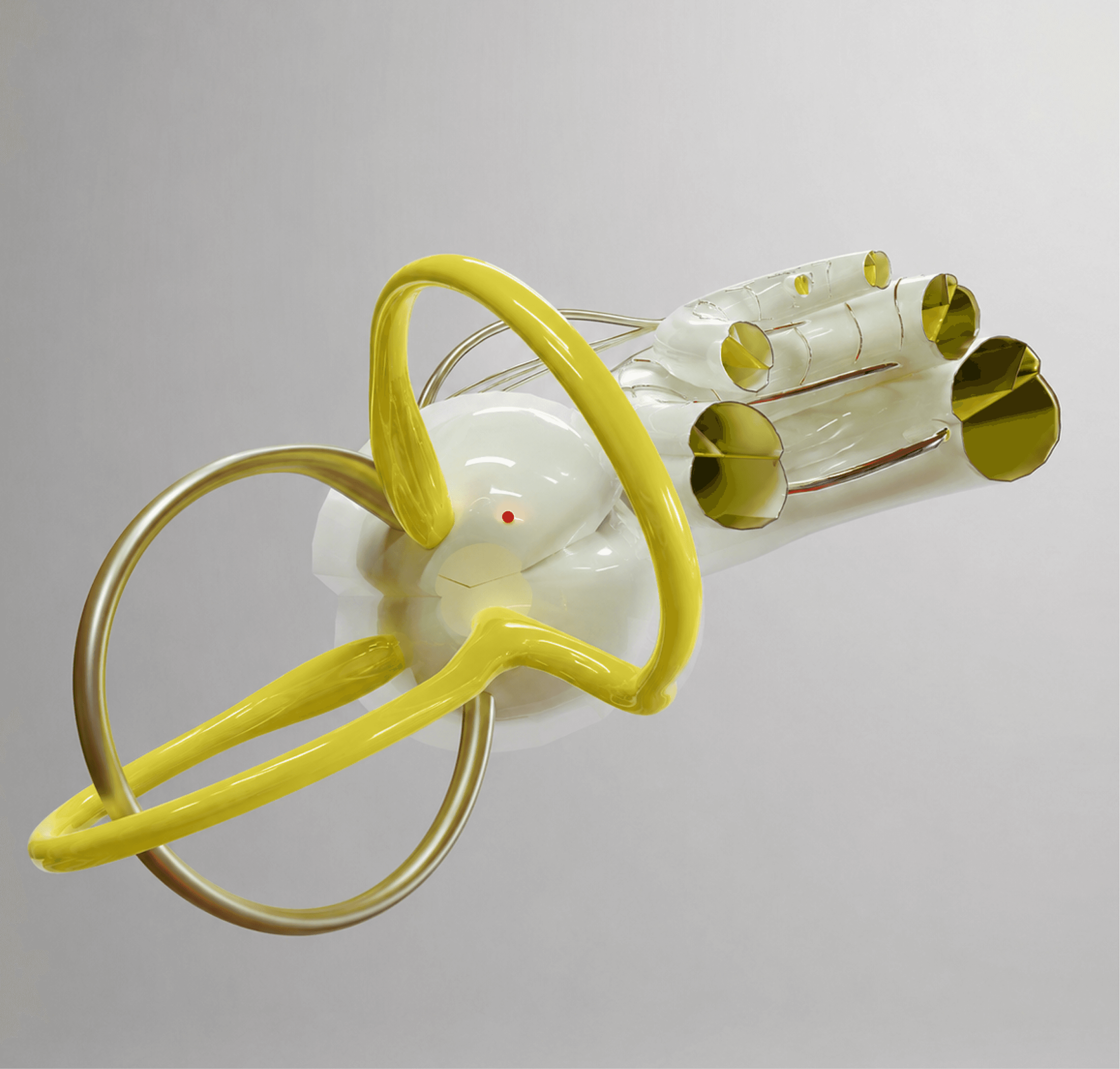
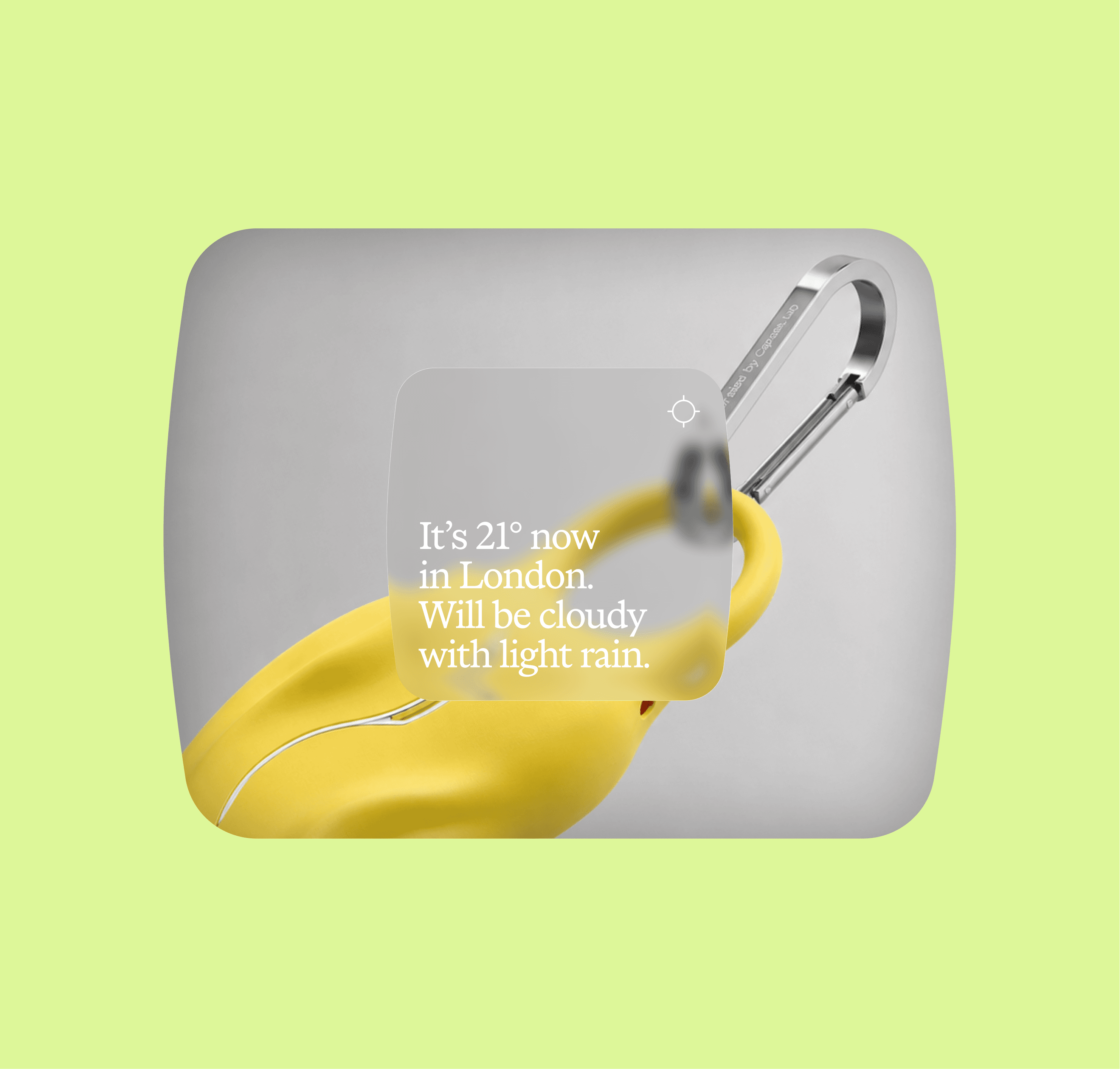
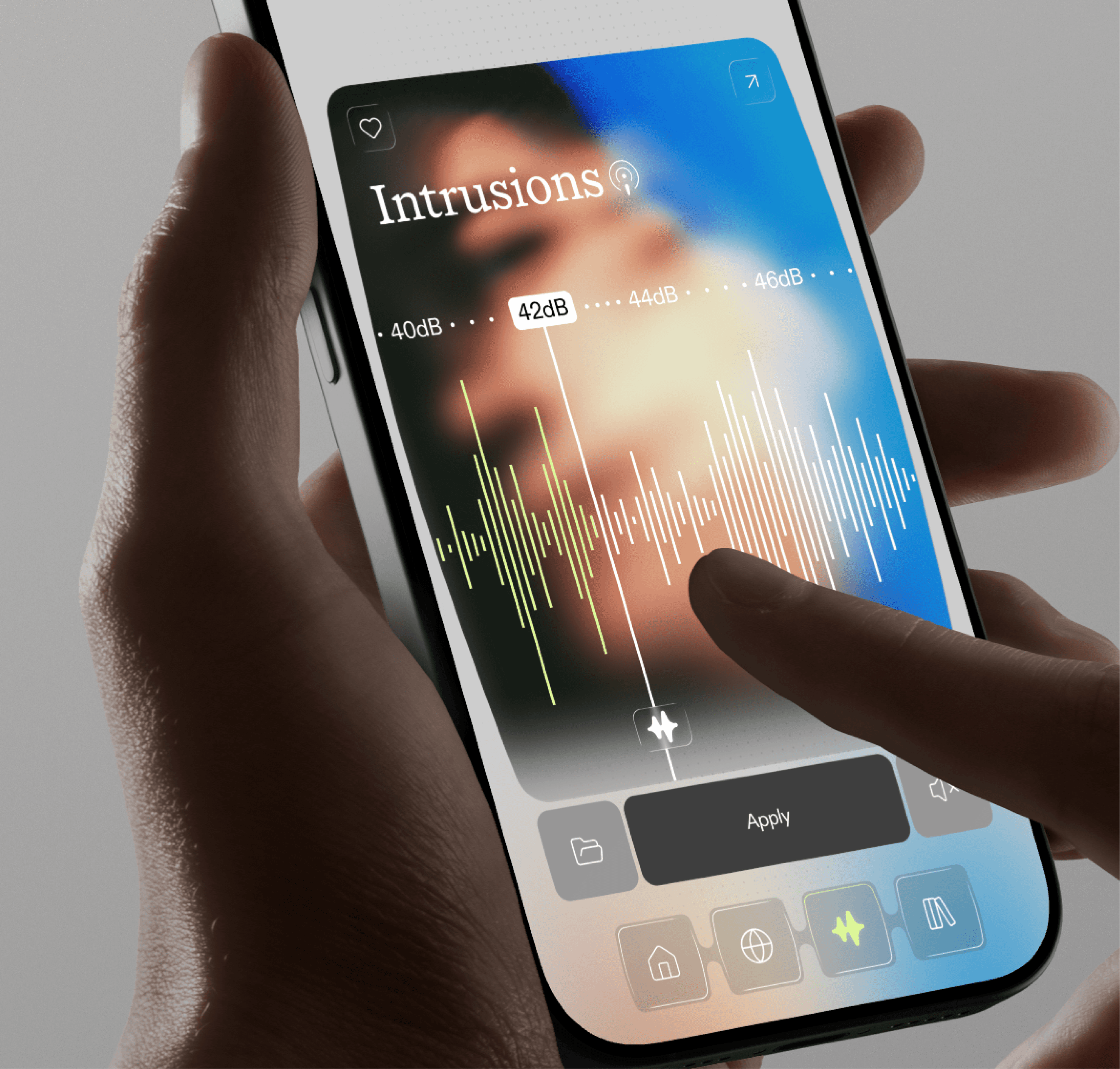
A personal project reimagining urban soundscapes as a playable digital instrument — turning everyday city sounds into interactive musical experiences.
Year
2025
Skills
Concept Development
Art Direction
UX/UI Design
Interface Design
Web Design
Case Study
AI-Generated Video
Year
2025
Skills
Concept Development
Art Direction
UX/UI Design
Interface Design
Web Design
Case Study
AI-Generated Video
Year
2025
Skills
Concept Development
Art Direction
UX/UI Design
Interface Design
Web Design
Case Study
AI-Generated Video
Additional projects
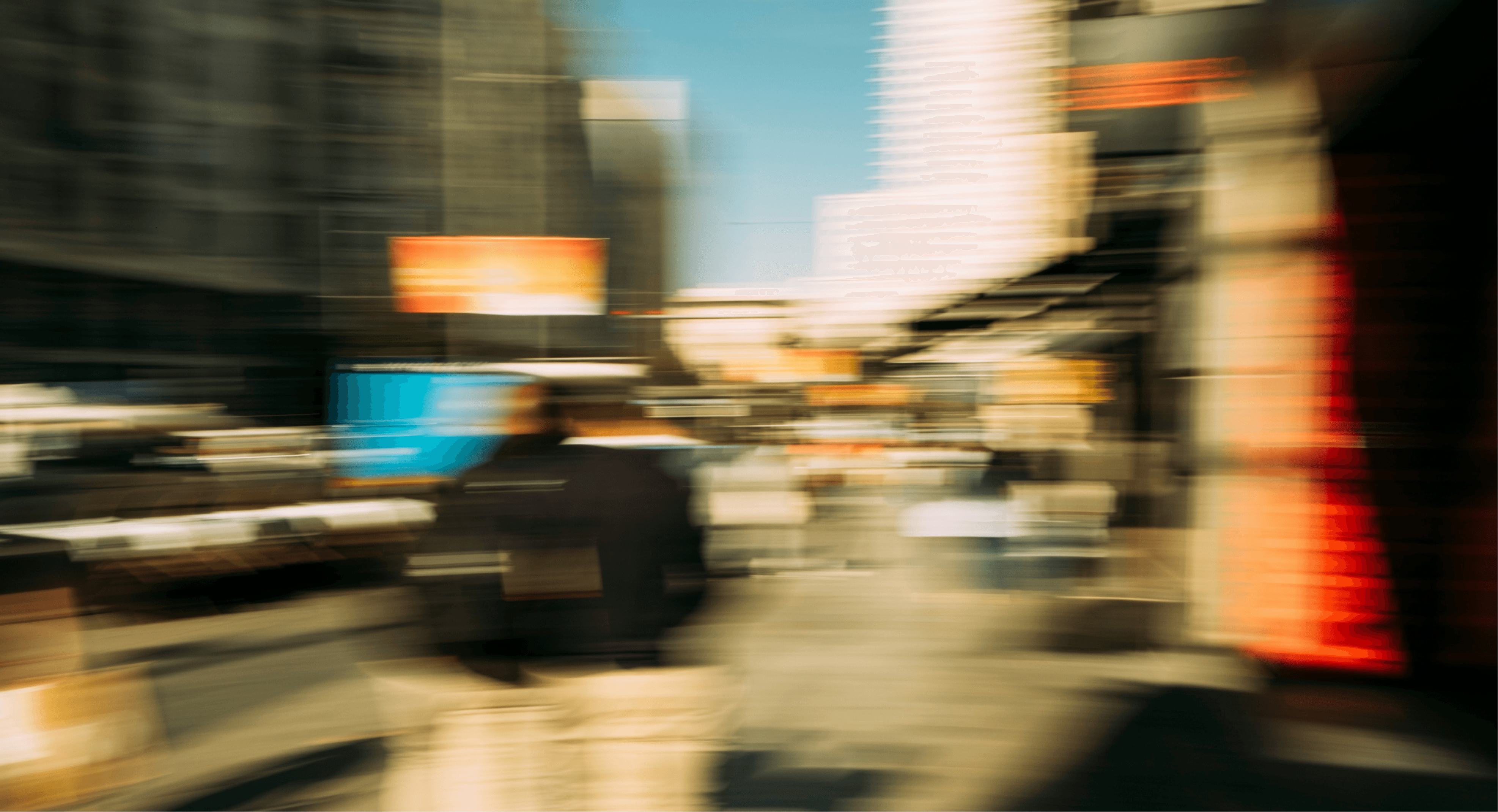
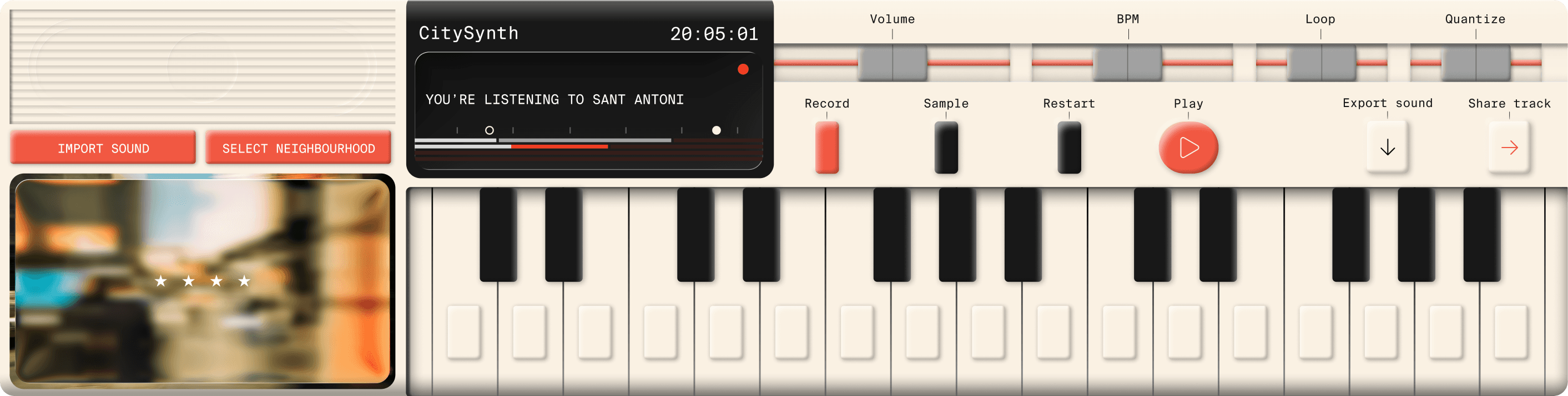
CitySynth is a project that reimagines urban soundscapes as a playable digital instrument. By transforming sounds gathered from city streets into musical elements, the system allows users to explore and compose new sonic narratives of urban life. Inspired by the Flâneur, the curious city wanderer, the project turns everyday observations into interactive digital experiences.
A self-initiated creative design project. Led the end-to-end design process — from research and concept development to interface design and prototyping — creating a playful digital synthesizer experience built around urban soundscapes.
CitySynth is a project that reimagines urban soundscapes as a playable digital instrument. By transforming sounds gathered from city streets into musical elements, the system allows users to explore and compose new sonic narratives of urban life. Inspired by the Flâneur, the curious city wanderer, the project turns everyday observations into interactive digital experiences.
CitySynth is a project that reimagines urban soundscapes as a playable digital instrument. By transforming sounds gathered from city streets into musical elements, the system allows users to explore and compose new sonic narratives of urban life. Inspired by the Flâneur, the curious city wanderer, the project turns everyday observations into interactive digital experiences.


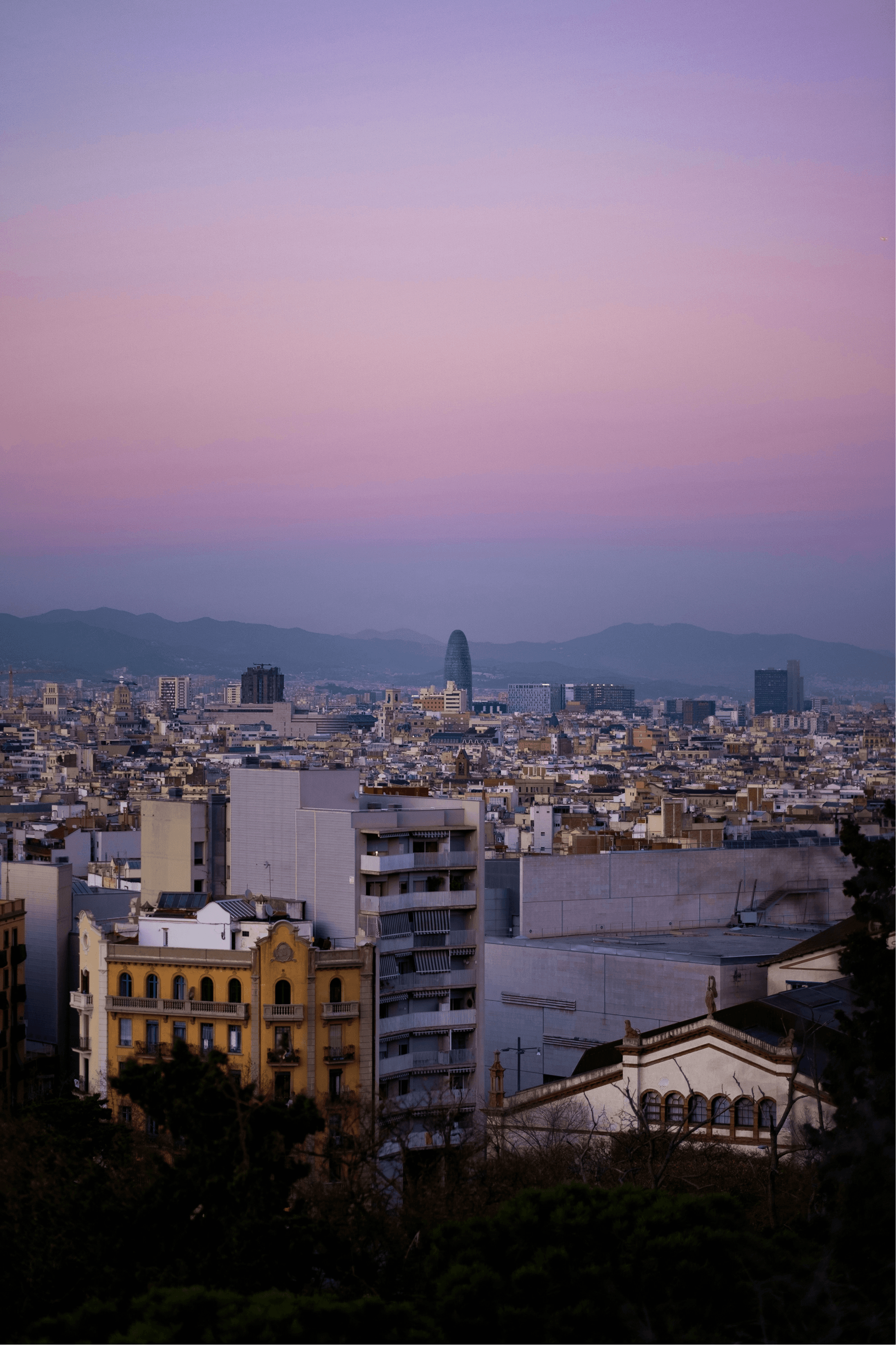

CitySynth is an interactive digital platform that transforms the soundscape of cities into a playground for creation and connection.
By mapping real urban sounds and turning them into modular synth experiences, the platform invites users to explore, compose, and share music born from their surroundings. Bridging design, sound, and community, CitySynth reimagines how we engage with cities - not just through what we see, but through what we hear and create together.
CitySynth is an interactive digital platform that transforms the soundscape of cities into a playground for creation and connection.
By mapping real urban sounds and turning them into modular synth experiences, the platform invites users to explore, compose, and share music born from their surroundings. Bridging design, sound, and community, CitySynth reimagines how we engage with cities - not just through what we see, but through what we hear and create together.
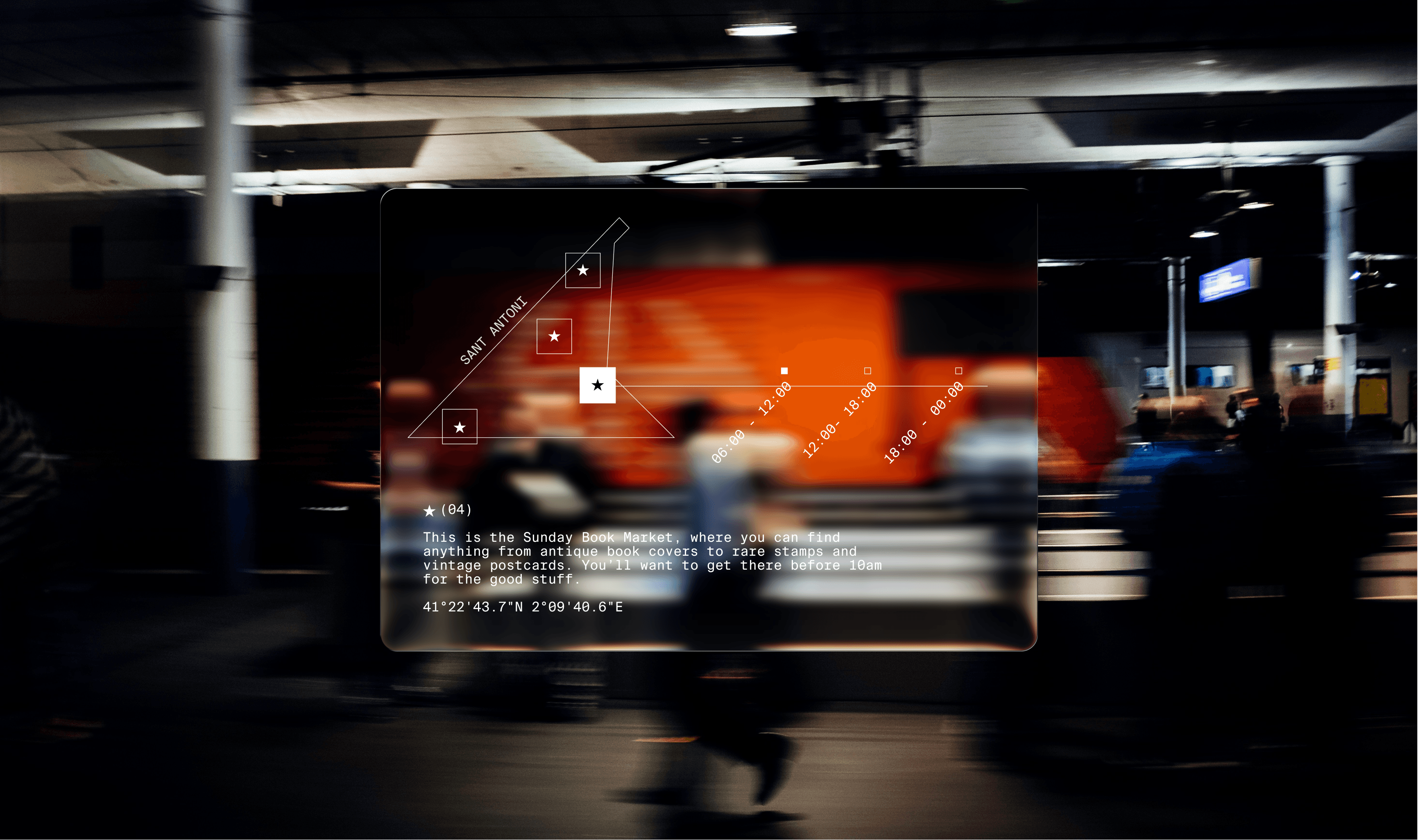

CitySynth is an interactive digital platform that transforms the soundscape of cities into a playground for creation and connection.
By mapping real urban sounds and turning them into modular synth experiences, the platform invites users to explore, compose, and share music born from their surroundings. Bridging design, sound, and community, CitySynth reimagines how we engage with cities - not just through what we see, but through what we hear and create together.
CitySynth is an interactive digital platform that transforms the soundscape of cities into a playground for creation and connection.
Current urban sound platforms (such as sound maps and archives) are mostly static and provide a one-way experience. Users can listen, but they cannot interact, remix, or contribute in a meaningful way. This limits creativity and reduces long-term engagement.
Transform static urban sound mapping into an interactive, creative, and playful experience.
Enable users to collect, create, and share sounds from their own urban environment.
Design a simple yet visually rich interface that simulates the experience of a digital synthesizer.
Encourage community dialogue around sound and the urban soundscape.
KPI 1 – User Engagement
Measure the number of interactions with the virtual synth (playing, recording, experimenting). This indicates how engaging and intuitive the platform is for users.
KPI 2 – Content Creation
Track how many users upload or generate new sound samples. A higher volume of user-generated content reflects creativity and active participation.
KPI 3 – Community Growth
Monitor the creation of new profiles and the expansion into multiple city soundscapes. This shows the platform’s ability to grow as a collaborative and scalable ecosystem.
User segment Musicians, DJs, and creative hobbyists seeking unique sound sources
• Condition While urban environments are rich in sound, existing tools fail to capture their playful, interactive potential
• Impact Users feel frustrated by passive consumption, lack of personalization, and absence of community-driven exploration
• Opportunity There is space for a platform that makes sound discovery interactive, creative, and social, turning everyday noise into material for play and collaboration

I explored how people interact with sound in their daily environments and how urban noise can turn into creative material. Drawing on a passion for electronic music and musical sensitivity, I mixed playfulness with structured research methods — competitive analysis, user scenario mapping, and quick creative workshops — to identify how different personas might engage with the tool.
Week 1 - Research & Empathize 📑
Explore urban soundscapes (collect examples, analyze context).
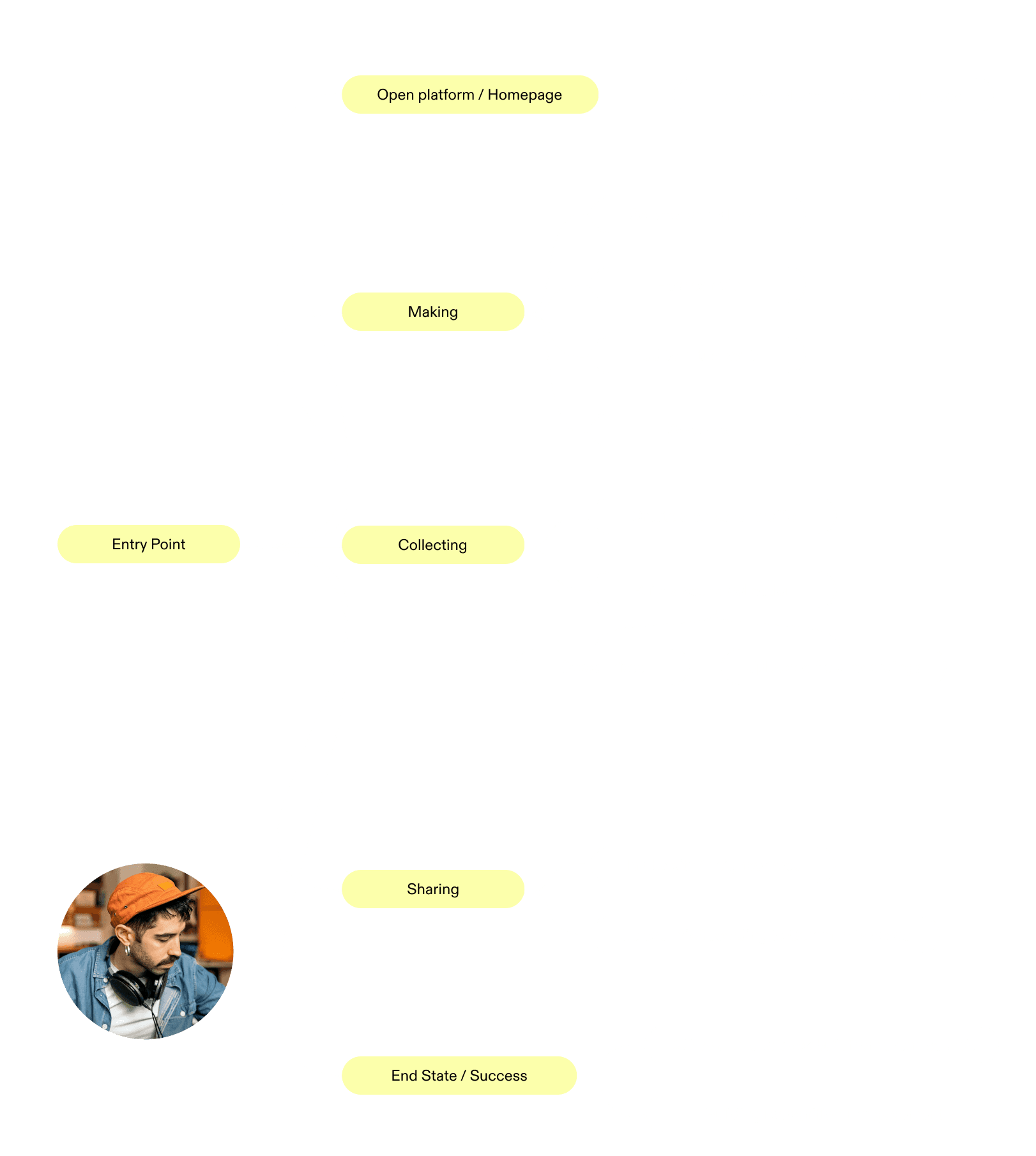
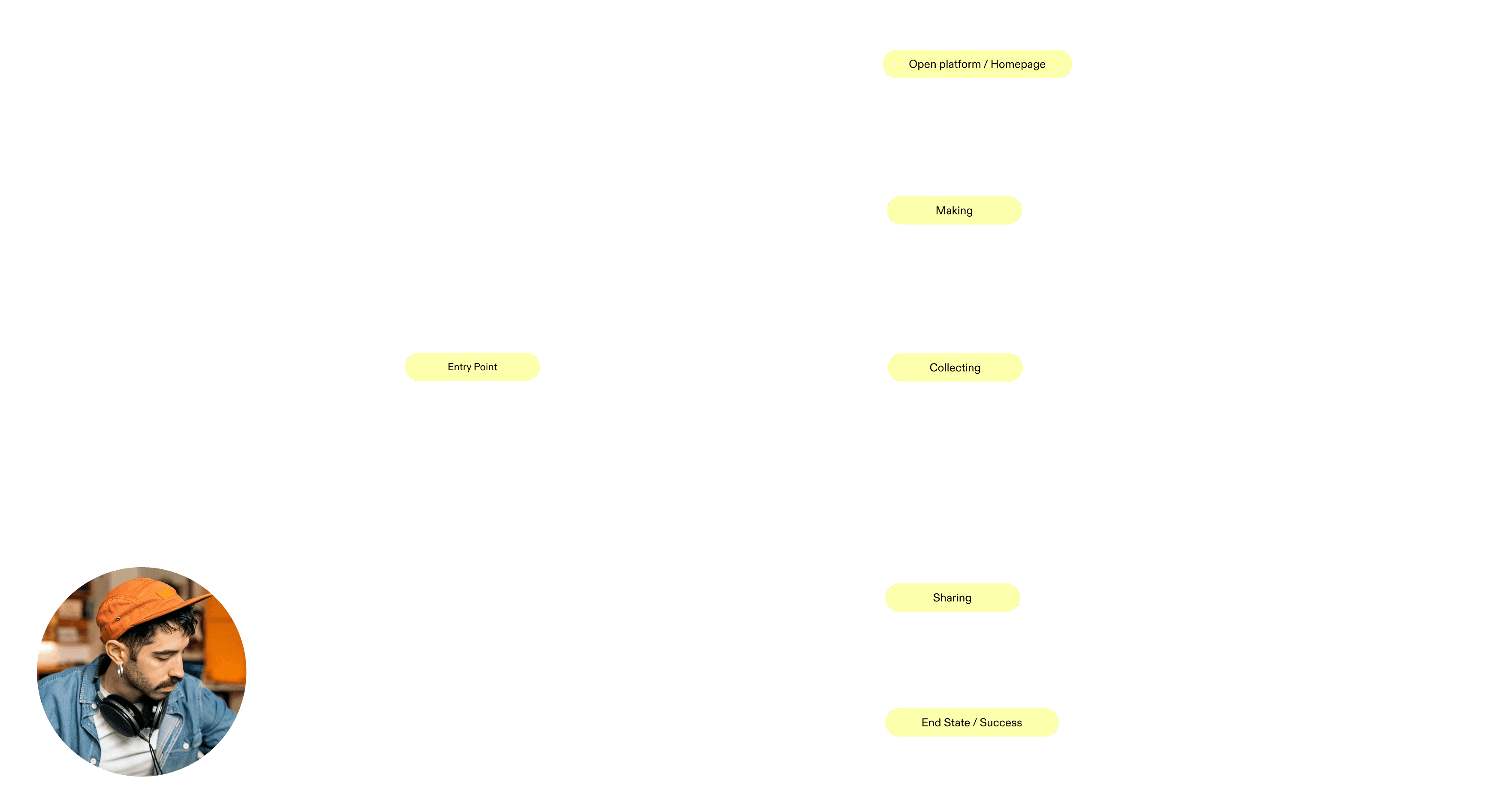
Identify user needs and goals (Making / Collecting / Sharing).
Define project mission.
Week 2 - Define & Ideate💡
Frame the problem and opportunities.
Build initial information architecture (site map, user flows).
Create moodboards and define visual direction.
Week 3 - Prototype 🖥️
Design wireframes → high-fidelity mockups.
Build interactive prototype (synth interface, navigation, profiles).
Week 4 - Test & Refine 🎧
Usability testing (hypothetical, given conceptual nature).
Iterate on feedback (UI refinements, flow adjustments).
Finalize deliverables (case study, presentation, portfolio).
CitySynth targets creatives who want to explore and play with sound. From DJs and electronic music enthusiasts to urban explorers and artists, the platform invites users to capture, remix, and share everyday noise in a social and expressive way.
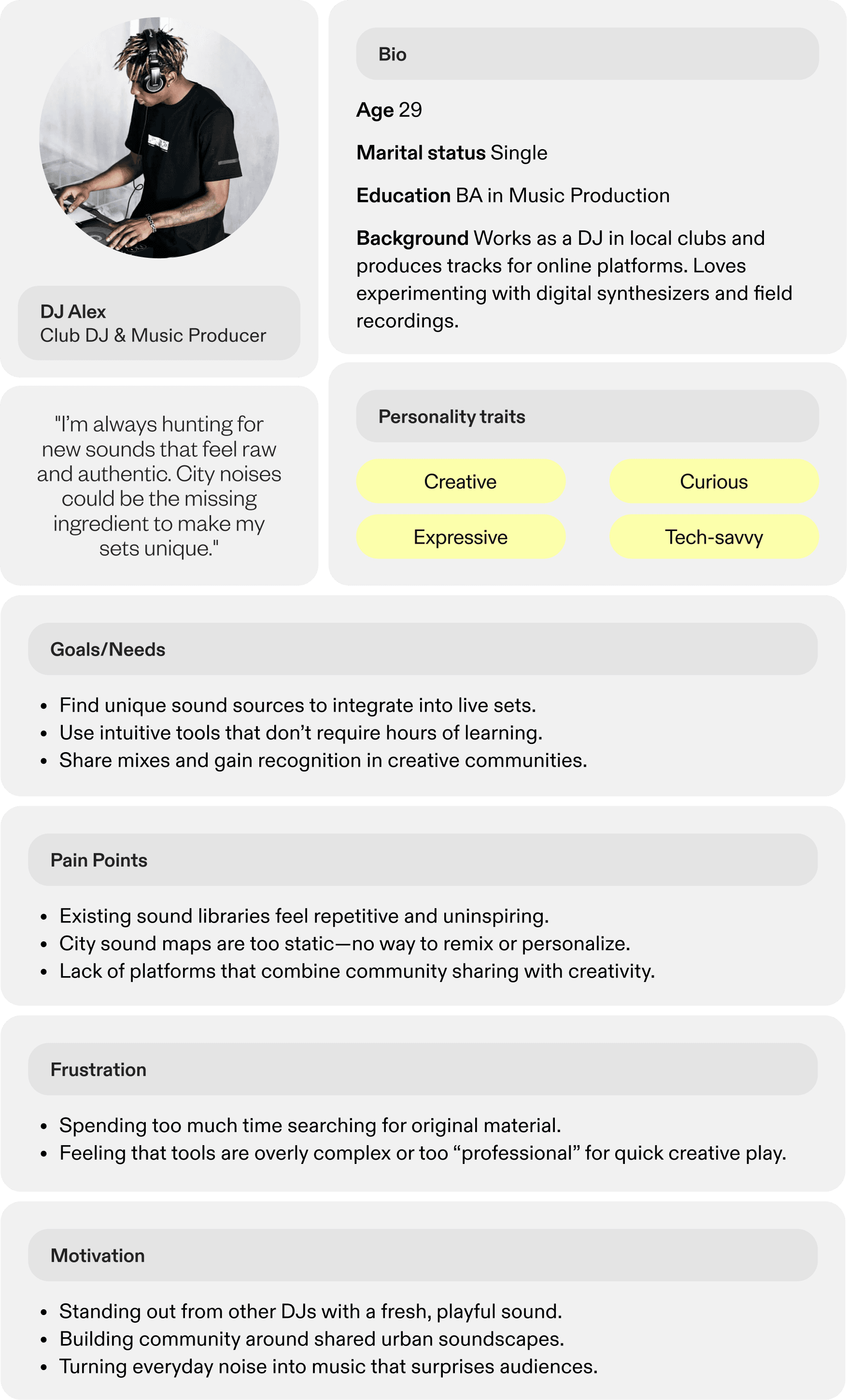
To illustrate the needs of our target users, we developed personas such as:
The DJ Focused on discovering fresh sounds and remixing them into live sets
The Urban Explorer Collects field recordings during walks and wants to reinterpret them through playful tools
The Music Hobbyist Interested in intuitive, accessible interfaces that allow for casual experimentation and sharing


We clustered ideas into three main groups
Group 1: Sound Interaction
Virtual synthesizer modeled on Casio VL-Tone.
Ability to remix environmental sounds in real time.
Layering samples to build custom tracks.
Group 2: Community & Sharing
Personal profiles with sound collections.
Upload and share original recordings.
City-based soundscapes curated by users.
Group 3: Expansion & Playfulness
Multi-city modular setup.
Visualizations of sound (waves, patterns).
Gamified challenges (collect sounds, remix others).
DJ using CitySynth


CitySynth is an interactive digital platform that transforms the soundscape of cities into a playground for creation and connection.
Current urban sound platforms (such as sound maps and archives) are mostly static and provide a one-way experience. Users can listen, but they cannot interact, remix, or contribute in a meaningful way. This limits creativity and reduces long-term engagement.
CitySynth is an interactive digital platform that transforms the soundscape of cities into a playground for creation and connection.
By mapping real urban sounds and turning them into modular synth experiences, the platform invites users to explore, compose, and share music born from their surroundings. Bridging design, sound, and community, CitySynth reimagines how we engage with cities - not just through what we see, but through what we hear and create together.
• User segment Musicians, DJs, and creative hobbyists seeking unique sound sources
• Condition While urban environments are rich in sound, existing tools fail to capture their playful, interactive potential
• Impact Users feel frustrated by passive consumption, lack of personalization, and absence of community-driven exploration
• Opportunity There is space for a platform that makes sound discovery interactive, creative, and social, turning everyday noise into material for play and collaboration
CitySynth is an interactive digital platform that transforms the soundscape of cities into a playground for creation and connection.
By mapping real urban sounds and turning them into modular synth experiences, the platform invites users to explore, compose, and share music born from their surroundings. Bridging design, sound, and community, CitySynth reimagines how we engage with cities - not just through what we see, but through what we hear and create together.
Transform static urban sound mapping into an interactive, creative, and playful experience.
Enable users to collect, create, and share sounds from their own urban environment.
Design a simple yet visually rich interface that simulates the experience of a digital synthesizer.
Encourage community dialogue around sound and the urban soundscape.
KPI 1 – User Engagement
Measure the number of interactions with the virtual synth (playing, recording, experimenting). This indicates how engaging and intuitive the platform is for users.
KPI 2 – Content Creation
Track how many users upload or generate new sound samples. A higher volume of user-generated content reflects creativity and active participation.
KPI 3 – Community Growth
Monitor the creation of new profiles and the expansion into multiple city soundscapes. This shows the platform’s ability to grow as a collaborative and scalable ecosystem.
I explored how people interact with sound in their daily environments and how urban noise can turn into creative material. Drawing on a passion for electronic music and musical sensitivity, I mixed playfulness with structured research methods — competitive analysis, user scenario mapping, and quick creative workshops — to identify how different personas might engage with the tool.
Users seek sound tools that are intuitive yet expressive. Interactivity increases engagement - people want to play, not just listen.
Personalization and community features (profiles, sharing) make the experience more meaningful, shaping the platform into an accessible and collaborative space for urban sound creation.
We clustered ideas into three main groups
Group 1: Sound Interaction
Virtual synthesizer modeled on Casio VL-Tone.
Ability to remix environmental sounds in real time.
Layering samples to build custom tracks.
Group 2: Community & Sharing
Personal profiles with sound collections.
Upload and share original recordings.
City-based soundscapes curated by users.
Group 3: Expansion & Playfulness
Multi-city modular setup.
Visualizations of sound (waves, patterns).
Gamified challenges (collect sounds, remix others).

DJ using CitySynth
CitySynth is an interactive digital platform that transforms the soundscape of cities into a playground for creation and connection.
Current urban sound platforms (such as sound maps and archives) are mostly static and provide a one-way experience. Users can listen, but they cannot interact, remix, or contribute in a meaningful way. This limits creativity and reduces long-term engagement.
Users seek sound tools that are intuitive yet expressive. Interactivity increases engagement - people want to play, not just listen.
Personalization and community features (profiles, sharing) make the experience more meaningful, shaping the platform into an accessible and collaborative space for urban sound creation.
• User segment Musicians, DJs, and creative hobbyists seeking unique sound sources
• Condition While urban environments are rich in sound, existing tools fail to capture their playful, interactive potential
• Impact Users feel frustrated by passive consumption, lack of personalization, and absence of community-driven exploration
• Opportunity There is space for a platform that makes sound discovery interactive, creative, and social, turning everyday noise into material for play and collaboration
Transform static urban sound mapping into an interactive, creative, and playful experience.
Enable users to collect, create, and share sounds from their own urban environment.
Design a simple yet visually rich interface that simulates the experience of a digital synthesizer.
Encourage community dialogue around sound and the urban soundscape.
KPI 1 – User Engagement
Measure the number of interactions with the virtual synth (playing, recording, experimenting). This indicates how engaging and intuitive the platform is for users.
KPI 2 – Content Creation
Track how many users upload or generate new sound samples. A higher volume of user-generated content reflects creativity and active participation.
KPI 3 – Community Growth
Monitor the creation of new profiles and the expansion into multiple city soundscapes. This shows the platform’s ability to grow as a collaborative and scalable ecosystem.
Week 1 - Research & Empathize 📑
Explore urban soundscapes (collect examples, analyze context).
Identify user needs and goals (Making / Collecting / Sharing).
Define project mission.
Week 2 - Define & Ideate💡
Frame the problem and opportunities.
Build initial information architecture (site map, user flows).
Create moodboards and define visual direction.
Week 3 - Prototype 🖥️
Design wireframes → high-fidelity mockups.
Build interactive prototype (synth interface, navigation, profiles).
Week 4 - Test & Refine 🎧
Usability testing (hypothetical, given conceptual nature).
Iterate on feedback (UI refinements, flow adjustments).
Finalize deliverables (case study, presentation, portfolio).
CitySynth targets creatives who want to explore and play with sound. From DJs and electronic music enthusiasts to urban explorers and artists, the platform invites users to capture, remix, and share everyday noise in a social and expressive way.
To illustrate the needs of our target users, we developed personas such as:
The DJ Focused on discovering fresh sounds and remixing them into live sets
The Urban Explorer Collects field recordings during walks and wants to reinterpret them through playful tools
The Music Hobbyist Interested in intuitive, accessible interfaces that allow for casual experimentation and sharing
I explored how people interact with sound in their daily environments and how urban noise can turn into creative material. Drawing on a passion for electronic music and musical sensitivity, I mixed playfulness with structured research methods — competitive analysis, user scenario mapping, and quick creative workshops — to identify how different personas might engage with the tool.
Users seek sound tools that are intuitive yet expressive. Interactivity increases engagement - people want to play, not just listen.
Personalization and community features (profiles, sharing) make the experience more meaningful, shaping the platform into an accessible and collaborative space for urban sound creation.
CitySynth targets creatives who want to explore and play with sound. From DJs and electronic music enthusiasts to urban explorers and artists, the platform invites users to capture, remix, and share everyday noise in a social and expressive way.
To illustrate the needs of our target users, we developed personas such as:
The DJ Focused on discovering fresh sounds and remixing them into live sets
The Urban Explorer Collects field recordings during walks and wants to reinterpret them through playful tools
The Music Hobbyist Interested in intuitive, accessible interfaces that allow for casual experimentation and sharing
We clustered ideas into three main groups
Group 1: Sound Interaction
Virtual synthesizer modeled on Casio VL-Tone.
Ability to remix environmental sounds in real time.
Layering samples to build custom tracks.
Group 2: Community & Sharing
Personal profiles with sound collections.
Upload and share original recordings.
City-based soundscapes curated by users.
Group 3: Expansion & Playfulness
Multi-city modular setup.
Visualizations of sound (waves, patterns).
Gamified challenges (collect sounds, remix others).
DJ using CitySynth
Week 1 - Research & Empathize 📑
Explore urban soundscapes (collect examples, analyze context).
Identify user needs and goals (Making / Collecting / Sharing).
Define project mission.
Week 2 - Define & Ideate💡
Frame the problem and opportunities.
Build initial information architecture (site map, user flows).
Create moodboards and define visual direction.
Week 3 - Prototype 🖥️
Design wireframes → high-fidelity mockups.
Build interactive prototype (synth interface, navigation, profiles).
Week 4 - Test & Refine 🎧
Usability testing (hypothetical, given conceptual nature).
Iterate on feedback (UI refinements, flow adjustments).
Finalize deliverables (case study, presentation, portfolio).